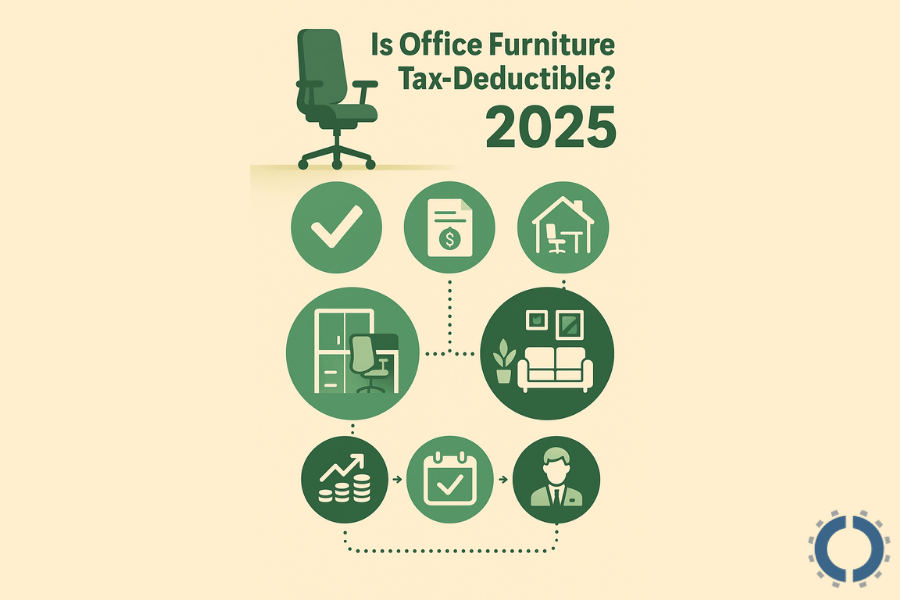
Are you wondering if you can claim depreciation on used office furniture for your business? Understanding how depreciation works can save you money and help you make smarter financial decisions.
Whether you’ve just bought secondhand desks and chairs or are planning to invest in them, knowing the rules around depreciation is crucial. You’ll discover exactly how used office furniture is treated when it comes to tax deductions and what steps you should take to maximize your benefits.
Keep reading to uncover the key facts that could impact your business expenses today.
Tax Rules For Office Furniture
Understanding tax rules for office furniture helps businesses save money. Office furniture qualifies as a business asset. Businesses can recover costs through depreciation. Depreciation spreads the cost of furniture over its useful life. Both new and used furniture have specific tax treatments.
Depreciation Basics
Depreciation allows a business to deduct the cost of furniture gradually. The IRS sets rules on how long this takes. Office furniture usually depreciates over seven years. Each year, a portion of the cost reduces taxable income. This lowers the overall tax bill for the business.
Businesses must keep records of purchase price and date. These records support depreciation claims during tax filing. Proper documentation is essential for IRS audits. The depreciation method commonly used is the Modified Accelerated Cost Recovery System (MACRS). MACRS offers a set schedule for deductions.
New Vs Used Furniture
New office furniture is depreciated based on its purchase price. The full cost is eligible for depreciation. Used furniture is also depreciable. The key difference lies in the asset’s value. Used furniture depreciates based on its fair market value at purchase.
Fair market value is the price paid for the used item. Businesses cannot depreciate more than this value. The depreciation period remains the same, usually seven years. Both new and used furniture qualify for the Section 179 deduction, with limits. This deduction allows immediate expensing of eligible furniture.
Choosing used furniture can reduce initial costs. Depreciation still provides tax benefits. Businesses should consult tax professionals for accurate valuation. Correct depreciation maximizes tax savings and follows IRS rules.
Eligibility Of Used Furniture
Used office furniture can be depreciated if it meets certain conditions. Businesses often buy secondhand furniture to save money. Understanding eligibility helps ensure proper tax treatment. Only specific types of used furniture qualify for depreciation.
Criteria For Depreciation
Used office furniture must be used in your business to qualify. It cannot be for personal use. The furniture must have a limited useful life, usually several years. It should be expected to wear out, decay, or become obsolete.
The purchase price must be clearly documented. Furniture must be ready for use when placed in service. It must have a determinable value at purchase time. Donated or inherited furniture may have different rules.
Documentation Requirements
Keep all purchase receipts and invoices for used furniture. These documents prove the cost and date of acquisition. A clear record of the furniture’s business use is necessary.
Maintain a depreciation schedule showing the start date and useful life. Track any improvements or repairs separately. This information supports depreciation claims during audits.
Without proper documentation, depreciation claims may be disallowed. Good records protect your business and simplify tax filing.
Depreciation Methods
Used office furniture can be depreciated if it is bought for business use. Depreciation spreads the cost over several years, reflecting its loss in value. Different methods, like straight-line or declining balance, help calculate this expense.
Understanding depreciation methods for used office furniture can save you money and streamline your financial management. When you buy used office furniture, knowing how to depreciate it properly can impact your business’s tax obligations. Here, we’ll explore different depreciation methods, offering practical insights to help you choose the best fit for your situation.Straight-line Method
The straight-line method is the simplest and most straightforward way to depreciate used office furniture. You spread the cost evenly over the furniture’s useful life. Imagine buying a desk for $500 with a lifespan of five years. You’d expense $100 each year. This method keeps your accounting predictable and consistent, making it easy to plan your budget. Can you foresee how this might simplify your financial forecasting?Accelerated Methods
Accelerated methods, like double-declining balance or sum-of-the-years-digits, allow you to depreciate more of the asset’s value upfront. This can be advantageous if your furniture loses value quickly or if you want to reduce taxable income sooner. For example, a chair costing $300 might depreciate $120 in the first year using double-declining balance. Does this approach fit your cash flow needs better? Choosing the right depreciation method depends on your business goals and financial strategy. Consider how each method affects your taxes and cash flow, and select the one that aligns with your objectives.
Credit: collaborative-office.com
Calculating Depreciation For Used Items
Calculating depreciation for used office furniture requires a clear understanding of how to establish its value and lifespan accurately. Unlike new items, used furniture has already lost some of its value, so you need to figure out the right cost basis. Also, estimating how long the item will continue to be useful affects your depreciation schedule.
Determining Cost Basis
The cost basis is the starting value for depreciation. For used office furniture, this isn’t the original purchase price but what you actually paid for the item. If you bought the furniture second-hand, use your purchase price as the cost basis.
Sometimes, if you received the furniture as a gift or transfer, you may need to use the current fair market value (FMV) at the time you got it. Keep receipts or appraisals handy to prove the cost basis if needed.
Useful Life Estimates
IRS guidelines typically assign a useful life of seven years for office furniture. However, you should consider the condition and quality of your used furniture. If it’s older or more worn out, its useful life might be shorter.
Think about your own experience with similar items. How long have they lasted before needing replacement? Adjust the depreciation timeline accordingly to match the realistic life expectancy of your furniture.
Tax Benefits And Limits
Understanding the tax benefits and limits related to depreciating used office furniture can help you make smarter financial decisions for your business. Depreciation reduces your taxable income by spreading the cost of the furniture over several years. However, specific IRS rules like the Section 179 deduction and bonus depreciation can impact how much you can write off and when.
Section 179 Deduction
The Section 179 deduction allows you to deduct the full purchase price of qualifying used office furniture in the year you buy it, instead of spreading the cost over time. This means if you buy $5,000 worth of used desks and chairs, you might be able to deduct the entire $5,000 in the same tax year.
Keep in mind, the deduction has limits. For 2024, the maximum Section 179 deduction is $1,160,000, but it phases out when your total equipment purchases exceed $2,890,000.
Not all used furniture qualifies. The item must be used more than 50% for business, and you must own it. If you lease, these rules don’t apply the same way.
Bonus Depreciation Rules
Bonus depreciation lets you deduct a large percentage of the cost of new or used property in the first year you place it in service. Currently, you can deduct 80% of the cost for used office furniture purchased in 2024.
This is helpful if your total cost exceeds the Section 179 limits or if you want to reduce your taxable income beyond Section 179.
However, bonus depreciation applies only to property with a recovery period of 20 years or less. Office furniture fits this category, so it qualifies.
Think about your business’s cash flow and tax situation before choosing between these options. Do you want a bigger immediate deduction or prefer to spread it out? Your choice could affect your tax bill significantly.
Common Mistakes To Avoid
Depreciating used office furniture can save money on taxes. Avoiding common mistakes helps ensure accurate depreciation. These errors often cause incorrect tax filings and potential penalties. Understanding these pitfalls protects your business and finances.
Incorrect Valuation
Many businesses overvalue used furniture. The price should reflect its fair market value, not the original cost. Overvaluation inflates depreciation amounts and raises red flags with tax authorities. Undervaluation also causes lower deductions and missed benefits. Use professional appraisals or reliable market data to set values. Accurate valuation leads to correct depreciation and compliance.
Missing Documentation
Proper records are essential for depreciation claims. Missing invoices, purchase receipts, or appraisal reports create problems during audits. Documentation proves the furniture’s cost and condition at purchase. Keep all paperwork organized and accessible for tax purposes. Without evidence, depreciation claims may be denied or adjusted. Maintain digital and physical copies for safety.
Record-keeping Tips
Keeping accurate records is essential for depreciating used office furniture. Proper documentation helps track expenses and ensures compliance with tax rules. Clear records make it easier to calculate depreciation and support claims during audits.
Tracking Purchase Details
Keep all purchase documents such as receipts and invoices. Note the date of purchase and the seller’s information. Record the cost paid for each item and any delivery or installation fees.
Include descriptions of the furniture to identify each piece clearly. Note the condition of the items at purchase, such as “used” or “refurbished.” These details help determine the correct depreciation method and period.
Maintaining Depreciation Schedules
Create a depreciation schedule to track the value of each furniture item over time. Update the schedule yearly to reflect accumulated depreciation. Use a simple table or spreadsheet to list:
- Item description
- Purchase date
- Cost
- Depreciation method
- Annual depreciation amount
- Book value
Keep all supporting documents like tax forms and calculation worksheets. Organized schedules reduce errors and simplify tax filing. They also provide proof of depreciation for your accountant or tax officer.
Credit: collaborative-office.com
When To Consult A Tax Professional
Determining whether you can depreciate used office furniture might seem straightforward, but tax rules can get complicated fast. Knowing when to reach out to a tax professional can save you from costly mistakes and missed deductions. If your situation involves nuances or if you want to ensure everything is handled correctly, expert advice is invaluable.
Complex Depreciation Cases
Sometimes, your used office furniture doesn’t fit neatly into standard depreciation categories. Maybe you purchased it from a related party, or it’s part of a larger asset bundle. These situations can affect how and when you claim depreciation.
Tax professionals have the expertise to navigate these complex scenarios. They can identify which depreciation method applies and help you maximize your benefits without raising red flags. Have you ever tried to figure out depreciation rules on your own and ended up more confused?
Audit Preparedness
Handling depreciation incorrectly can trigger an audit. A tax professional can help you organize your records and ensure your depreciation claims are well-documented. They know what auditors look for and can guide you to keep your paperwork audit-ready.
Being proactive with expert guidance reduces stress and protects your business from unexpected penalties. Wouldn’t you prefer peace of mind over worrying about potential IRS questions?
Credit: collaborative-office.com
Frequently Asked Questions
Can Used Office Furniture Be Depreciated For Tax Purposes?
Yes, used office furniture can be depreciated if it is used for business. The IRS allows depreciation on used assets, spreading the cost over their useful life to reduce taxable income.
What Depreciation Method Applies To Used Office Furniture?
The Modified Accelerated Cost Recovery System (MACRS) is typically used for depreciating office furniture. It allows businesses to recover costs over a 7-year period, regardless of whether the furniture is new or used.
How Is The Depreciation Value Calculated For Used Furniture?
Depreciation is calculated based on the purchase price, minus any salvage value. The cost is then spread over the furniture’s useful life using the chosen depreciation method.
Can Depreciation Be Claimed On Donated Used Office Furniture?
No, depreciation cannot be claimed on donated furniture. Instead, businesses may claim a charitable contribution deduction based on the fair market value of the donated items.
Conclusion
Used office furniture can be depreciated under tax rules. The value depends on the furniture’s condition and cost. Keep clear records of the purchase date and price. Depreciation helps reduce taxable income over time. Consult a tax expert to apply the right method.
This approach saves money and supports smart business choices. Understanding depreciation makes buying used furniture more practical. It’s a useful way to manage office expenses wisely.